
Brand communication! The crash course 1/5
Brand communication! How, What, Why?
Welcome to our first of five parts of the mini course on effective brand communication. In this series, we want to share our knowledge and experience with you so that you can strengthen your brand and improve your communication strategy. Whether you're starting a new business or want to redefine the brand identity of an established company, strong and coherent brand communication is essential to increase awareness, attract customers, and build loyalty. Through effective brand communication, you can tell the story of your company, communicate your values and purpose, and highlight your uniqueness in a competitive market. In this course, you will learn how to set up brand communication, delimit areas and provide tangible, applicable steps to improve your brand communication. We're excited to start this journey with you. Stay tuned and learn how to tell your brand's story in an effective way.
Brand communication hierarchy
Today, we want to deal intensively with the structure and hierarchy of brand communication. In marketing jargon, terms such as “brand purpose” are often thrown around without it being clear what exactly is behind it. We want to shed light on the darkness and show you how these elements are connected and why every step on the way to effective brand communication is important.
You can think of brand communication as an onion divided into different layers. Each layer has its own character and specific function within the entire brand communication process. Together, they form the overall picture and help build and strengthen the identity and image of a brand.
The five basic layers of this “brand communication bulb” are:
- Purpose
- mission
- vision
- Trueline
- Tagline
Each of these layers has its own lifespan and can change over time — but it is always focused on the central idea, the purpose. However, running from purpose to tagline without taking the intermediate steps into account is a mistake that many companies make. Understanding this hierarchy is crucial for making the brand communication process effective and creating a coherent and compelling brand image. This is the only way the brand can clearly communicate its differentiation and successfully highlight its unique selling point.
Purpose
The Purpose is the heart of brand communication and the innermost layer of our brand communication bulb. It is the foundation on which everything else is built.
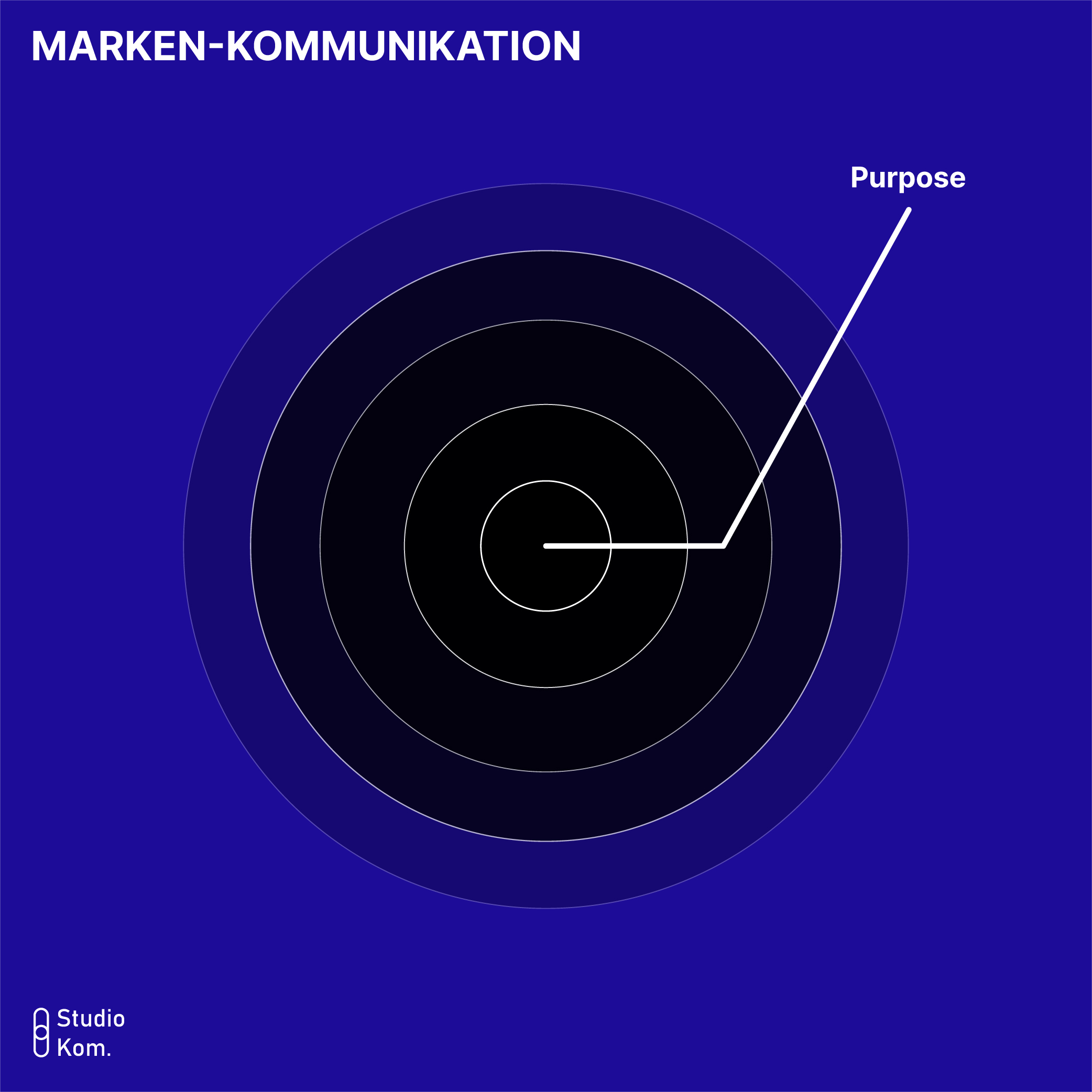
- What is the purpose? Purpose is the real reason why your company exists, apart from the intrinsic function of making a profit. It is that which never changes. Your purpose should reflect the values that your company represents and the impact you want to have on the world.
- Why is purpose important? Purpose is important because it is at the core of your brand. It gives your company direction and purpose that goes beyond just doing business. It's what motivates your employees to do their best every day and makes your customers identify with and support your brand.
- How do you define the purpose? Defining purpose is a profound process that requires thorough self-reflection. You must think about why you do what you do, what you want to give to the world, and what values you represent. The purpose should be authentic and really suit you and your company.
The purpose is therefore the anchor on which your company is based. It is what sets you apart from others and gives you a unique position in the market. It's what keeps your customers coming back to you, and it's what makes potential customers choose you. By setting and communicating your purpose, you can create a strong and authentic brand image that lasts for the long term.
mission
The second layer in our brand communication onion is the mission.
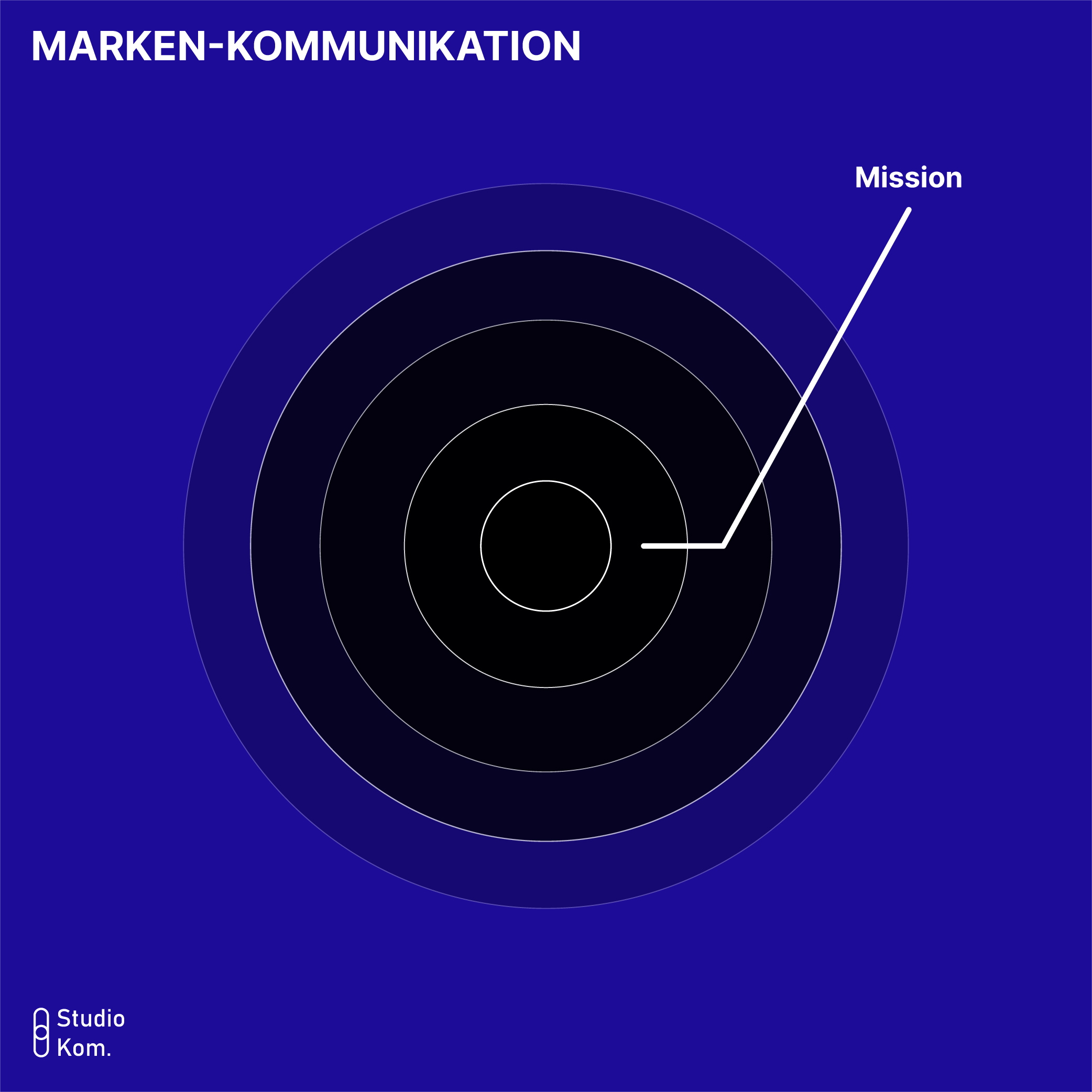
- What is the mission? The mission is a long-term strategy that aims to achieve the purpose. In contrast to the purpose, the mission can change every 10 to 25 years. It is more flexible and adaptable to the changing business environment.
- Why is the mission important? The mission serves as a bridge between the purpose and the practical implementation of your business goals. It translates your purpose into tangible actions and goals. With a clearly defined mission, you can ensure that all of your activities are focused on fulfilling your purpose.
- How do you define the mission? Defining the mission requires a thorough analysis of your business goals and strategies. You need to think about how you can put your purpose into practice, what steps you need to take to achieve your goals, and how you can best use your resources to achieve your mission.
The mission gives your business clear direction and helps you determine your goals and priorities. It helps you make decisions that are in line with your purpose and enables you to effectively plan and organize your activities and initiatives. With a clearly defined mission, you can successfully move your company forward and turn your purpose into reality.
vision
The third layer we're looking at is the vision.
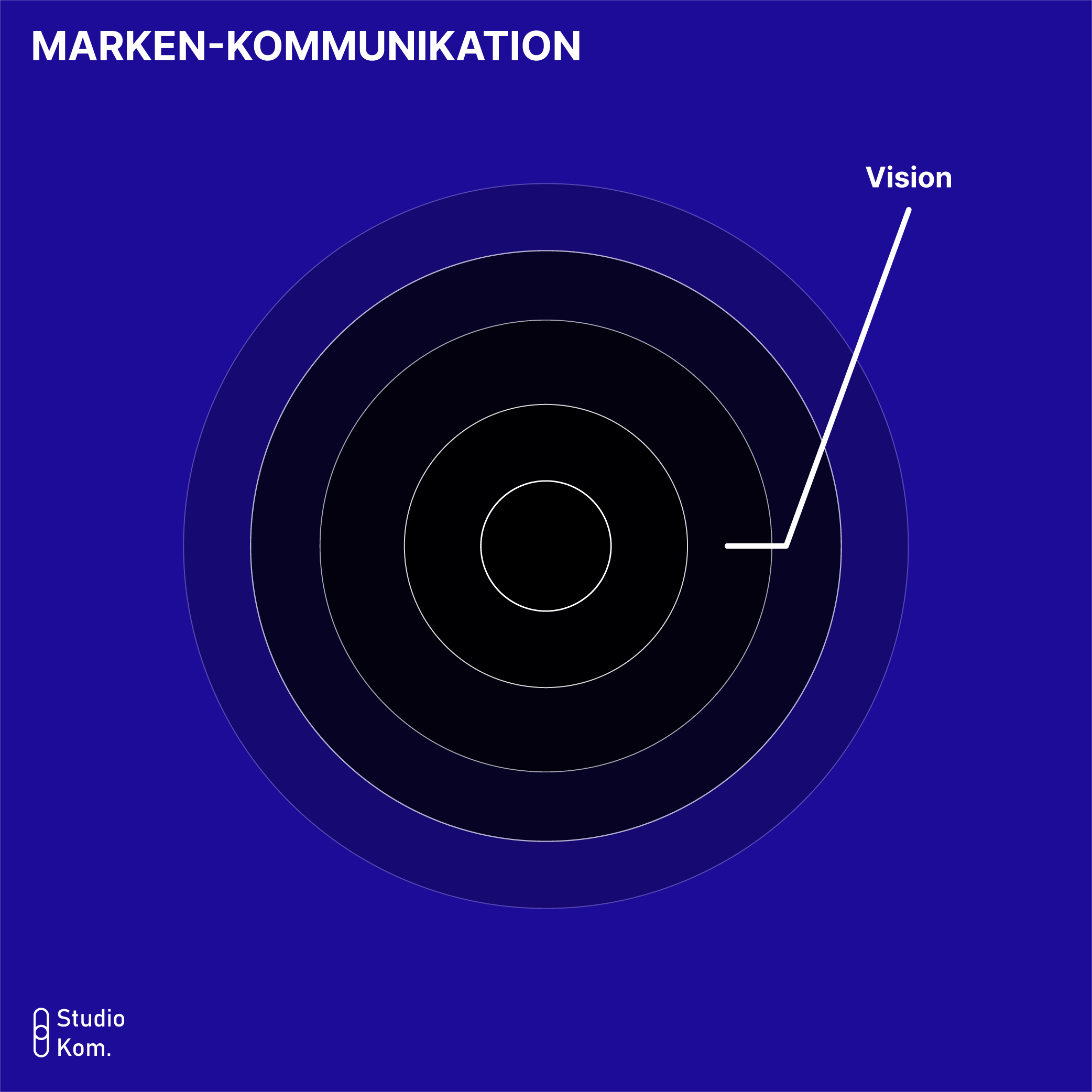
- What is the vision? The vision is a bold and clear picture of the future that inspires and motivates your organization. In contrast to the mission, which focuses on current activities, the vision looks ahead. It can change every 7 to 15 years, but is always geared to the mission and purpose.
- Why is vision important? The vision is crucial to setting the course and long-term goal of your company. It gives employees an idea of where the company is heading and what it wants to achieve. The vision helps your team focus on the mission and channel their efforts in a common direction.
- How do you define the vision? An effective vision should be inspiring and motivating. It should represent a clearly defined goal for the future that is high enough to encourage challenges and innovation, but realistic enough to be achievable. When defining your vision, you should think about what you want to achieve in the future and how you envision the ideal future for your company.
Vision is an essential element of brand communication. It helps you deliver a clear and consistent message that inspires your audience and makes them support and engage with your brand. With a strong and compelling vision, you can strengthen your brand's perception, drive engagement among your target audience, and achieve long-term brand success.
Trueline
The next layer of brand communication is Trueline.
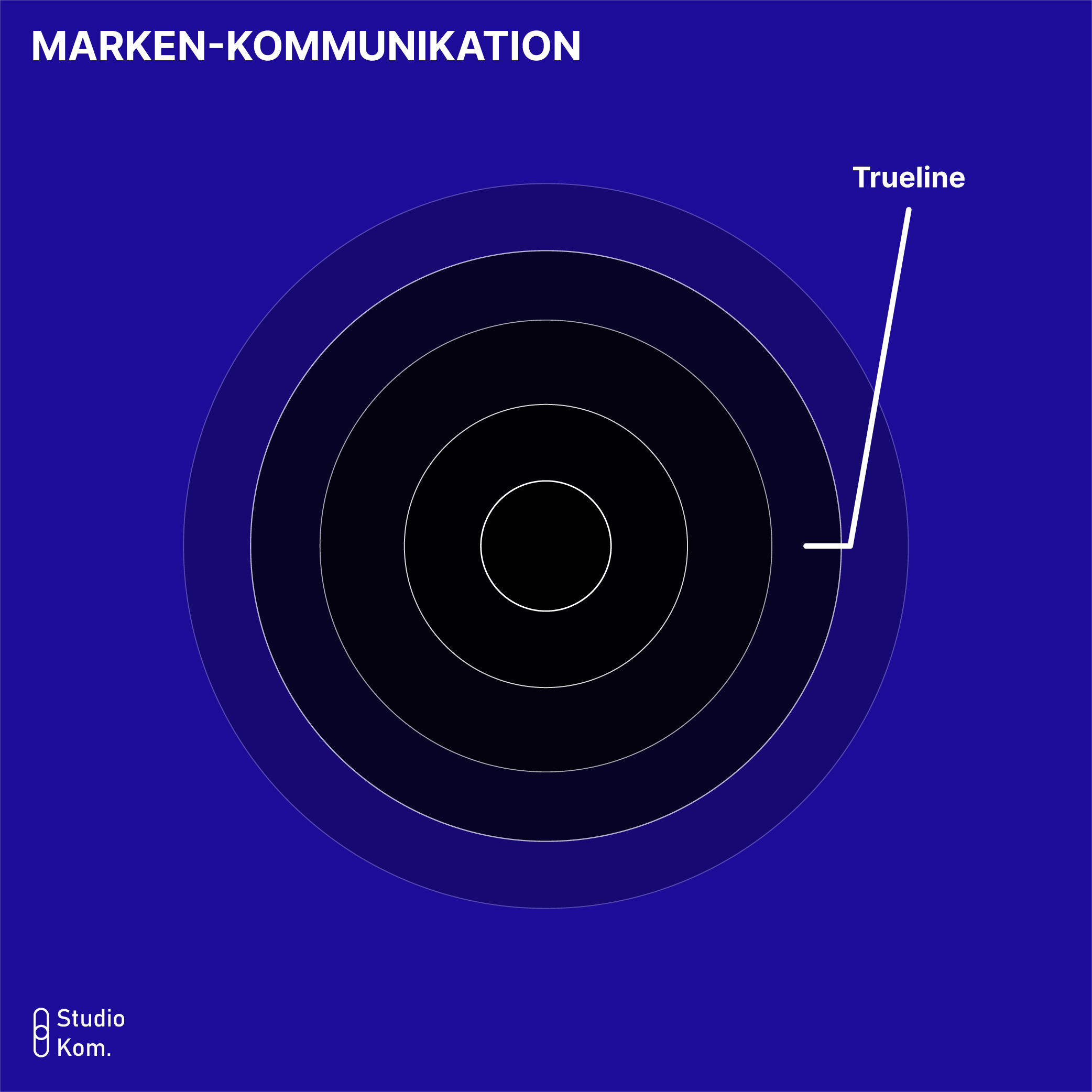
- What is Trueline? Trueline is an internally expressed conviction that highlights the unique differentiations of your organization or brand. In contrast to other aspects such as purpose and vision, which relate to a longer period of time, Trueline can change every 3 to 10 years.
- Why is Trueline important? The Trueline serves as a guide for your organization's internal communication and strategy. It reflects what really sets your company apart from the competition. The Trueline serves as a bridge between the internal perception of your brand and how it is communicated externally.
- How do you define trueline? When defining Trueline, you should ask yourself: What makes our company or brand unique? What is at the core of what we do and how is it different from what others do? These questions will help you identify and clearly state your brand's trueline.
Trueline is an important component of your brand communication, as it forms the basis for designing and implementing your brand strategy. It helps you develop a clear and consistent brand message that authentically represents your company and brand. A well-defined Trueline can help to strengthen credibility and trust in your brand, deepen engagement with your target audience, and ultimately increase your business success.
Tagline
After defining trueline, we come to the outermost layer of brand communication, the Tagline.
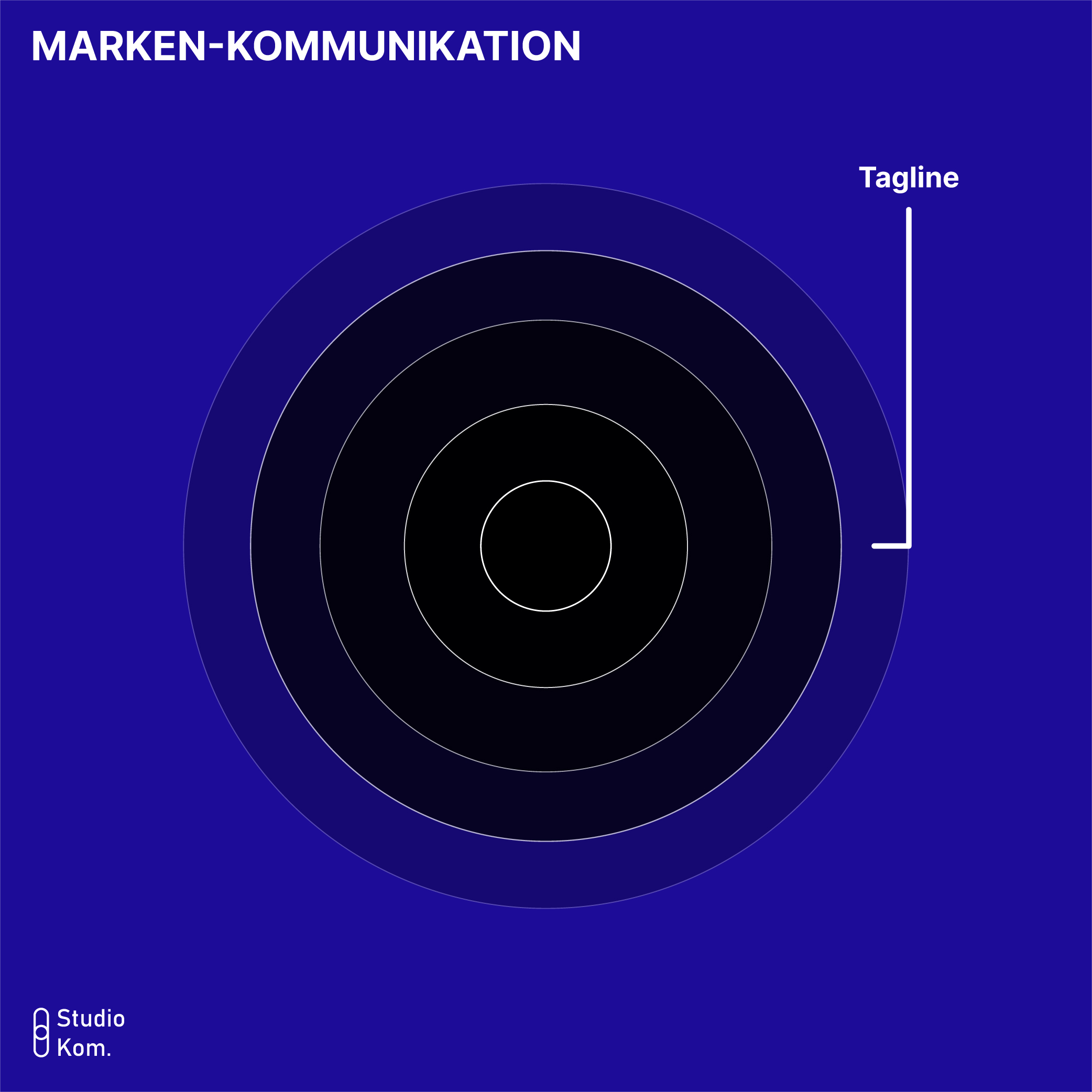
- What is a tagline? A tagline is an outward expression of the internally defined trueline. It is a short, concise slogan or sentence that sums up the essence of your brand and reflects the identity of your company. In contrast to other elements of brand communication, the tagline can change every 1 to 5 years.
- Why is a tagline important? An effective tagline can reinforce brand identity, communicate the brand promise, and emphasize the uniqueness of your brand. It serves as a central element of your brand communication that is immediately recognizable and stays in the minds of your target group.
- How do you create an effective tagline? When creating a tagline, keep an eye on your Trueline. The tagline should reflect this and express your brand personality. It should be short, memorable, and unambiguous, and at the same time convey your brand's core message.
A good example of an effective tagline is Nike's slogan: “Just Do It.” This slogan reflects Nike's trueline — empowering people through sport — and conveys a message of motivation and action. It is memorable, powerful and has become synonymous with the Nike brand over the years.
A well-thought-out and effective tagline can increase awareness of your brand, influence the perception of your brand and strengthen loyalty with your target group. It serves as the key to developing your brand identity and communicating your brand message to your target group.
examples
To further illustrate the concept of brand communication, let's look at some successful brands and how they implement these principles in practice.
Apple
- The Purpose Apple is to “build tools for the mind that expand the horizons of human knowledge.” yours mission was to create “a computer for the rest of us.” Die vision was the creation of a digital lifestyle revolution. yours Trueline is “design at the interface of technology and art,” which is reflected in their Tagline “Think Different” reflects.
starbucks
- Starbucks Purpose is to “inspire and promote human encounter — one person, one cup, and one neighborhood at a time.” yours mission is to “create a place where you feel at home when you're not at home.” yours vision was the globalization of premium coffee. yours Trueline Is “premium coffee, ethically sourced and perfectly prepared,” which is reflected in their Tagline “Your Third Place” reflects.
Mercedes-Benz
- The Purpose From Mercedes-Benz, it is “the best or nothing.” yours mission It was to make driving safer and more comfortable. yours vision was the production of premium vehicles. yours Trueline is “Technical perfection and elegant design”, which is reflected in their Tagline “The Best or Nothing” reflects.
Coca-Cola
- The Purpose Coca-Cola's mission is to “inspire people and create moments of optimism and joy.” yours mission It was to “create refreshing drinks for every situation in life.” yours vision It was to become a global brand. yours Trueline is “refreshment, joy and optimism,” which is reflected in their Tagline “Open Happiness” reflects.
These examples show how the various levels of brand communication work together to create a coherent and compelling brand message. Each element is carefully thought out and contributes to the overall identity and message of the brand.
What does brand communication hierarchy mean for my company?
As a decision maker in your company, you can ask yourself: “What does all this mean for me? How can I apply these principles to our own brand?” The answer is simple: Any company, big or small, can use this brand communication structure to sharpen their own brand identity and send a strong, consistent message.
Start with your Purpose. This is the deepest core of your brand. Explore the question: “Why does our company even exist, apart from profit?” This is the foundation on which everything else is built.
Eure mission is the bridge that brings your purpose to reality. It is a clear strategy that shows how you want to achieve your ultimate goal. This may change over time, but it should always reflect your purpose.
Die vision is a picture of your desired future. It is bold and clear and offers a direction in which you are striving. It should be inspiring and motivate everyone in your organization to focus on achieving your mission.
Eure Trueline is what makes your company or brand unique. It is an internal expression aimed at the most compelling differentiations of your organization. This is what sets you apart from the competition and makes your brand unique.
After all, the Tagline The outer expression of your trueline. It is what the public sees and hears. It should be short and concise, and capture the essence of what your brand represents.
By going through these layers of brand communication, you can create a stronger, coherent, and more influential brand that engages people and helps them identify with your company. But remember that it's not a one-time endeavor. It's an ongoing process that requires careful consideration and adjustments to ensure that your brand continues to be relevant and impactful.
conclusion
In summary, sharpening and communicating your brand identity is no easy task. It requires strategic thinking, creativity, and a deep understanding of your brand at various levels. From purpose, the deepest and most fundamental level, to the mission and vision, which represents strategy and future vision, to the trueline and tagline that communicate the unique differentiations of your brand, every step is decisive.
It's important to understand that effective brand communication isn't achieved by simply setting an appealing tagline. Rather, it is the result of a careful process that takes place over various stages and evolves over time.
The beauty of this process lies in its ability to create brands that are consistent and strong at every level. Brands that reach their target groups, appeal to them, and win their loyalty. They are brands that stay in the memory and can relate to people.
We hope this insight into the different layers of brand communication helps you sharpen your own brand with greater clarity and confidence. Remember, it's an ongoing process that requires dedication, patience, and a lot of work. But you'll be richly rewarded — with a strong, unique and memorable brand. Stay tuned for the next part of this mini-course, where we'll dive deeper into the details of these layers and provide practical guidance on how to use them effectively. Until then, happy brand sharpening!

Explore more blogs