Employer branding: More important than ever
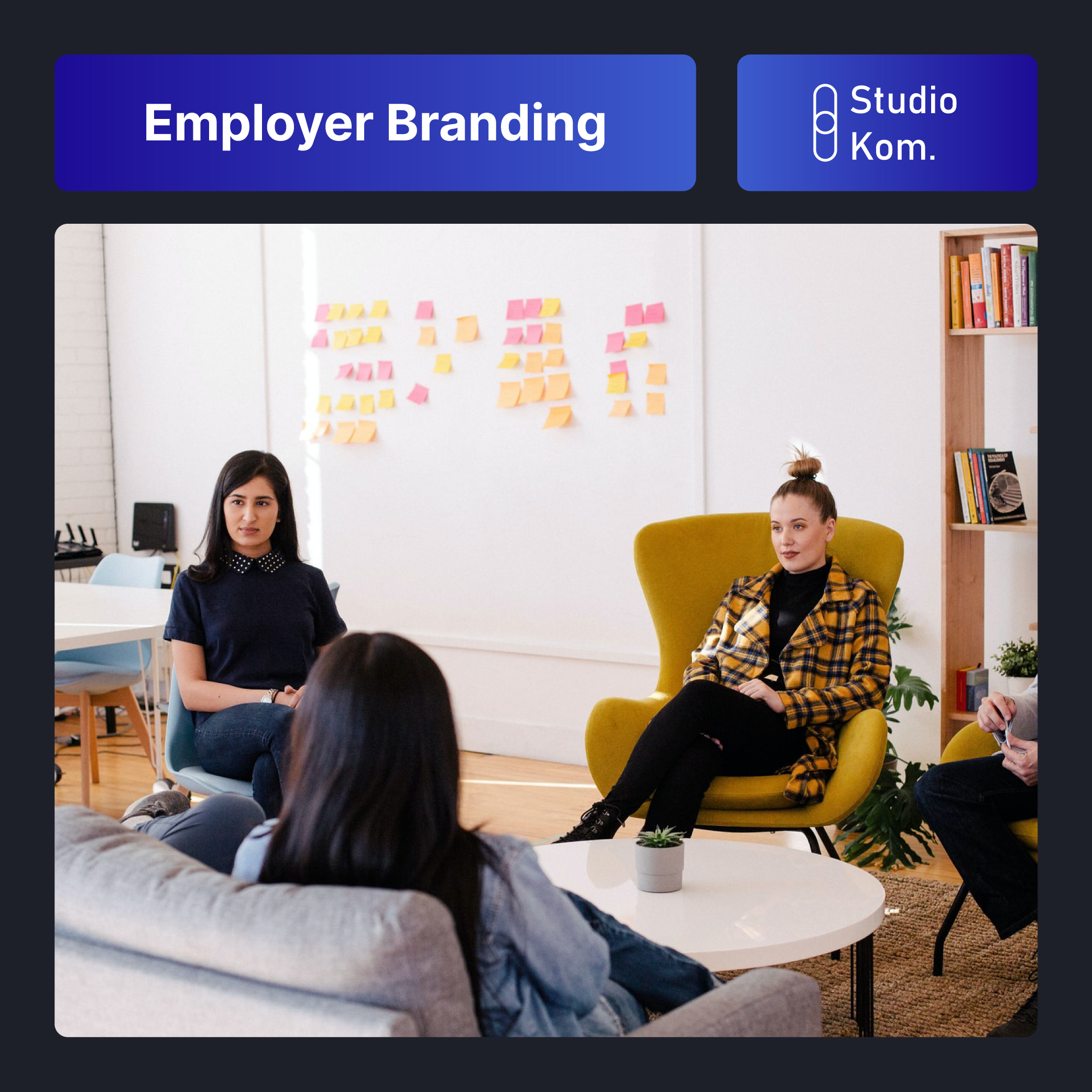
Employer Branding
Do you know that? Do you have many interesting positions to fill in your company and receive virtually no applications? And the CVs that reach you do not match the advertised position or do they only match the advertised position very imprecisely? Do you even need months to fill vacancies for jobs with a rather low qualification?
Yes, unemployment in Germany is currently 5.4% and there is a massive shortage of skilled workers, which experts predicted years ago. In April this year, 44% of companies in the KfW-IFO Skilled Workers Barometer stated that their business activities were hampered by a lack of skilled workers.
These are facts. But what about your company's employer brand? How do you position yourself as an attractive employer and successfully prevail against competitors on the job market?

Just as with building a brand, as an employer, you need a dedicated strategy that involves three aspects: analyzing the current situation, defining the target positioning and a key differentiator. The questions must be clarified as to which employees you need for your corporate strategy goals and what you have to offer them.
Just as when building a brand, you need a definition of your desired employees. A small craft business in a small town in Baden-Württemberg certainly has a different idea of its desired applications than a start-up for vegan food in Berlin.
When it comes to employer branding, it is also very important what message your company conveys on career websites and social media channels. What do you stand for as an employer, what do you do, what not, what makes you an attractive employer and how do I convey authenticity. A very good example is Starbucks with their specially designed Instagram page for employee stories and posts.
Generation Y and Z in particular — in addition to financial aspects — place great emphasis on fun, self-fulfillment, individualization and flexibility of working conditions, on personal appreciation and, in particular, on the meaningfulness of the job. Professional activity has a completely different meaning for the generation than for the post-war generation in Germany, for example.

All people working in the human resources sector have been massively experiencing the “War of Talents” in recent years. The fact that this term was coined back in 1997 — a year before the term “employer branding” appeared in an English-language specialist article, by the way — shows the immense and urgent need for action.
At Studio Kom., we are brand makers — whether product, service or employer. Through our team, which is diversified in terms of culture and age, we illuminate the range of target groups on a daily basis.

Explore more blogs